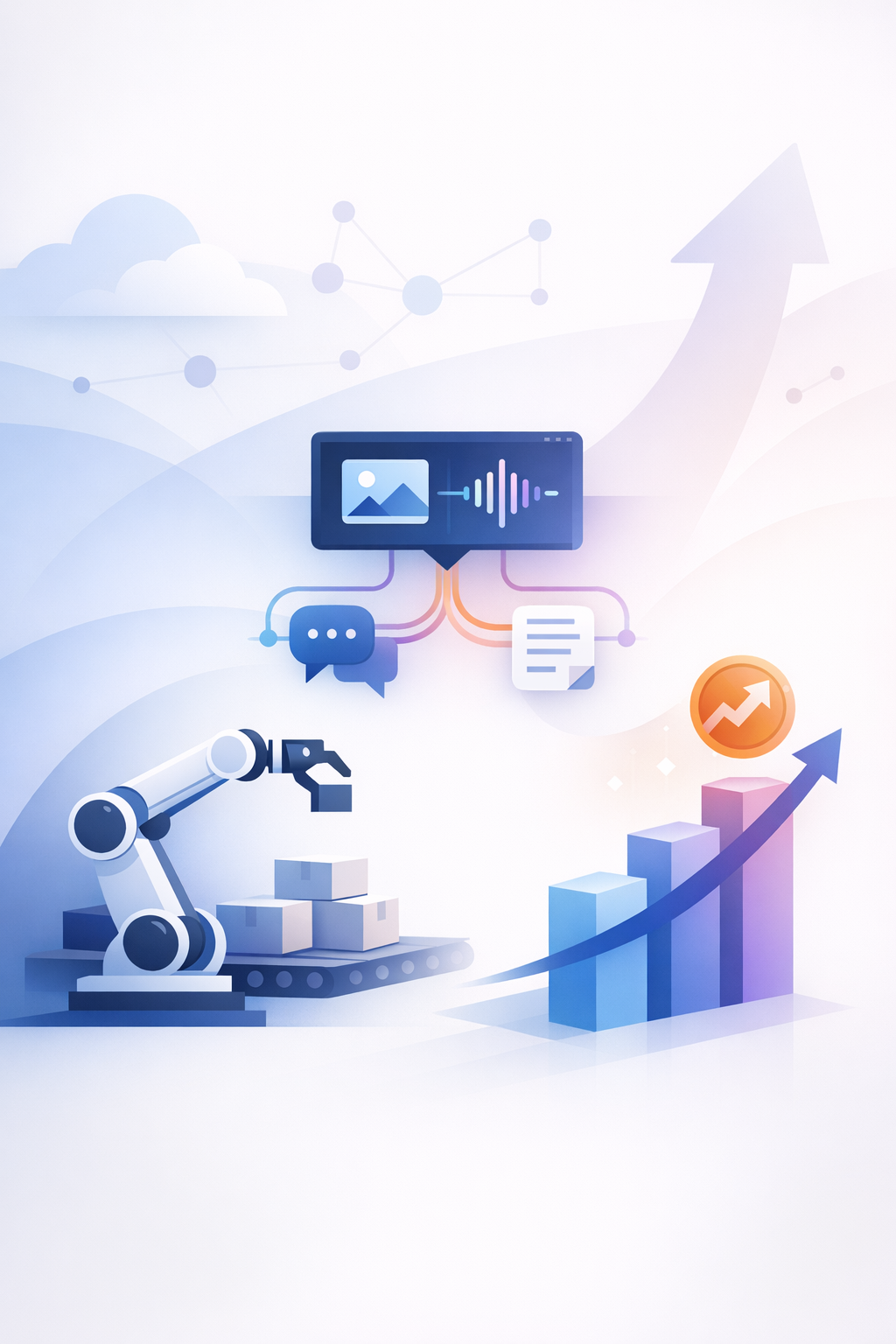
This Week in AI: From Bigger Models to Real-World Deployment (Without Hiring a Small Army)
TL;DR
- Nvidia pushed “physical AI” forward with open models Cosmos and GR00T for robots that can understand real environments, reason, and plan actions—partners like Boston Dynamics and Caterpillar are integrating them. [1][8][13][15]
- Google shipped Gemini 3 Flash and is preparing a global rollout of Gemini 3 Pro/Nano Banana Pro, positioning them for large-context and multimodal developer use cases. [4][6][12]
- The model leaderboard is fragmenting: GPT-5.2 leads reasoning (AA v4.0), Claude Opus 4.5 leads coding (SWE-bench), and Gemini 3 Pro leads user preference (LMArena). [4][6][10]
- OpenAI plans to test ChatGPT ads for free users (sponsored placements at the bottom of responses) as it looks for ways to offset infrastructure costs, while also pitching governments on AI expansion and data centers. [2][3]
- AI capex is surging (Meta, Microsoft, Tesla), and markets are watching whether deployments translate into returns. [7][9]
Intro
Most SMBs aren’t asking, “Which model is smartest?” They’re asking, “Which workflows can I automate this quarter without breaking ops, compliance, or budgets?”
This week’s theme: AI is shifting from a model arms race into deployment reality—robots in factories, multimodal models in production tools, and monetization/governance pressure shaping what vendors ship next.
1) Physical AI moves from demos to deployment
What happened
Nvidia launched open physical AI models Cosmos and GR00T aimed at helping robots understand the real world, reason, and plan actions, with the goal of accelerating commercial deployment in manufacturing and beyond. Partners including Boston Dynamics and Caterpillar are integrating them. [1][8][13][15]
Why it matters for SMBs
Even if you don’t run a factory, this signals a broader shift: “AI” is increasingly expected to drive real-world execution, not just generate text. For SMBs in logistics, e-commerce fulfillment, and field services, the bar is moving toward faster cycle times and fewer manual handoffs.
Automation play (what AAAgency can build)
Create a “physical-ops control tower” workflow that connects operational signals to action queues:
- Ingest incident/maintenance/fulfillment signals from your existing systems (tickets, forms, scanners, Slack) into a single ops queue.
- Auto-triage and route tasks (priority, assignment, SLA) with human approval steps for safety-critical actions.
- Track outcomes and feed results back into your ERP/CRM so ops learns over time.
This prepares your business for more physical automation later—without waiting for robots to show up at your loading dock.
2) Multimodal + massive context is becoming the default for developer workflows
What happened
Google released Gemini 3 Flash and is preparing a global rollout of Gemini 3 Pro/Nano Banana Pro, highlighting benchmark performance (including LMArena) and large context windows aimed at developers and multimodal tasks. [4][6][12]
Why it matters for SMBs
Large-context and multimodal systems tend to reduce the “glue work” of operations: pulling information from long documents, threads, specs, and mixed formats (text + images) without splitting everything into tiny prompts. That’s a direct lever on cycle time in marketing, customer support, and internal ops.
Automation play (what AAAgency can build)
Implement a “single intake → many outputs” pipeline:
- One intake (email, form, or shared inbox) becomes structured fields + routing decisions.
- Generate internal summaries, customer-facing replies, and next-step tasks from the same source, with approvals for anything that touches customers or legal.
- Store the structured output in your CRM/helpdesk and push only the right snippet into Slack/Teams so your team stops scrolling through novel-length context.
What happened
Top models are competing on different strengths: GPT-5.2 reportedly leads in reasoning (AA v4.0), Claude Opus 4.5 excels in coding (SWE-bench), and Gemini 3 Pro wins user preference (LMArena). [4][6][10]
Why it matters for SMBs
This is a procurement and architecture issue more than a tech curiosity. If you standardize on one model for everything, you may overpay or underperform in key workflows (e.g., analytics-heavy operations vs. code-heavy automation vs. customer-facing content). Also: your team will keep “shadow switching” tools if the official one isn’t fit for purpose.
Automation play (what AAAgency can build)
Build a “model router” into your automations:
- Route tasks by type (reasoning-heavy, code-heavy, preference/content-heavy) to different models while keeping one consistent UI for staff (e.g., in Slack or a ticketing system).
- Enforce guardrails: what data can go where, required approvals, and logging.
- Keep outputs consistent by standardizing templates and evaluation checks—so you’re not running a multi-model circus. (One ringmaster is enough.)
4) Ads, governance, and capex: the business model is shaping the product
What happened
OpenAI plans to test ads in ChatGPT for free users via sponsored placements at the bottom of responses, aiming to offset infrastructure costs. The company is also pitching governments on AI expansion and data centers. [2][3] Separately, AI spending is surging—Meta, Microsoft, and Tesla are raising capex—while stocks see mixed results as investors look for returns from deployments. [7][9]
Why it matters for SMBs
Two practical implications:
- “Free” tools may become noisier (ads) and less predictable over time—fine for experimentation, risky for core workflows. [2][3]
- Vendors are under pressure to prove ROI, which typically leads to faster product changes and shifting pricing/limits—meaning your automations should be designed to be portable and measurable. [7][9]
Automation play (what AAAgency can build)
Operationalize AI with ROI and governance baked in:
- Add audit logs, approval steps, and clear “what data went where” tracking across automations.
- Instrument time-saved metrics at the workflow level (e.g., ticket handle time, content turnaround, order exception resolution), so you’re not guessing whether AI spend is worth it.
- Design for swap-ability: isolate model calls behind a simple internal service so you can change providers without rebuilding every workflow.
Quick Hits
- Physical AI and agentic systems are scaling in industry, including a Nvidia survey noting 58% of retailers deploying AI; there’s also an e&/IBM collaboration for governance AI, and Hyundai deploying Atlas robots. [1][3]
- Elon Musk reportedly increased a lawsuit to $134B against OpenAI/Microsoft over “wrongful gains” tied to his early contributions, alongside a prediction that AI surpasses human intelligence this year. [3]
Practical Takeaways
- If your ops rely on long email threads, SOPs, or specs, prioritize large-context workflows that turn messy inputs into structured actions (with approvals). [4][6][12]
- If you’re standardizing on one model “for simplicity,” reconsider: route by task type to reduce cost and improve output quality. [4][6][10]
- If you’re using free AI tools for anything customer-facing, plan for variability (like ads) by putting critical workflows behind your own governed automation layer. [2][3]
- If leadership is asking for ROI, don’t debate model IQ—instrument time saved and error reduction at the workflow level. [7][9]
- If you’re in retail/logistics/manufacturing-adjacent work, start preparing “execution-ready” ops pipelines now; physical automation is moving closer to day-to-day reality. [1][8][13][15]
CTA
Book a free 10-minute automation audit with AAAgency.
What’s the one workflow in your business you’d most like to run faster—with fewer errors?
Conclusion
This week wasn’t just about smarter models—it was about AI becoming operational: physical AI pushing into industry, multimodal systems aiming at real developer use, and business-model pressure shaping how tools evolve. The win for SMBs is clear: build automations that are measurable, governed, and flexible enough to keep working as the AI landscape shifts.