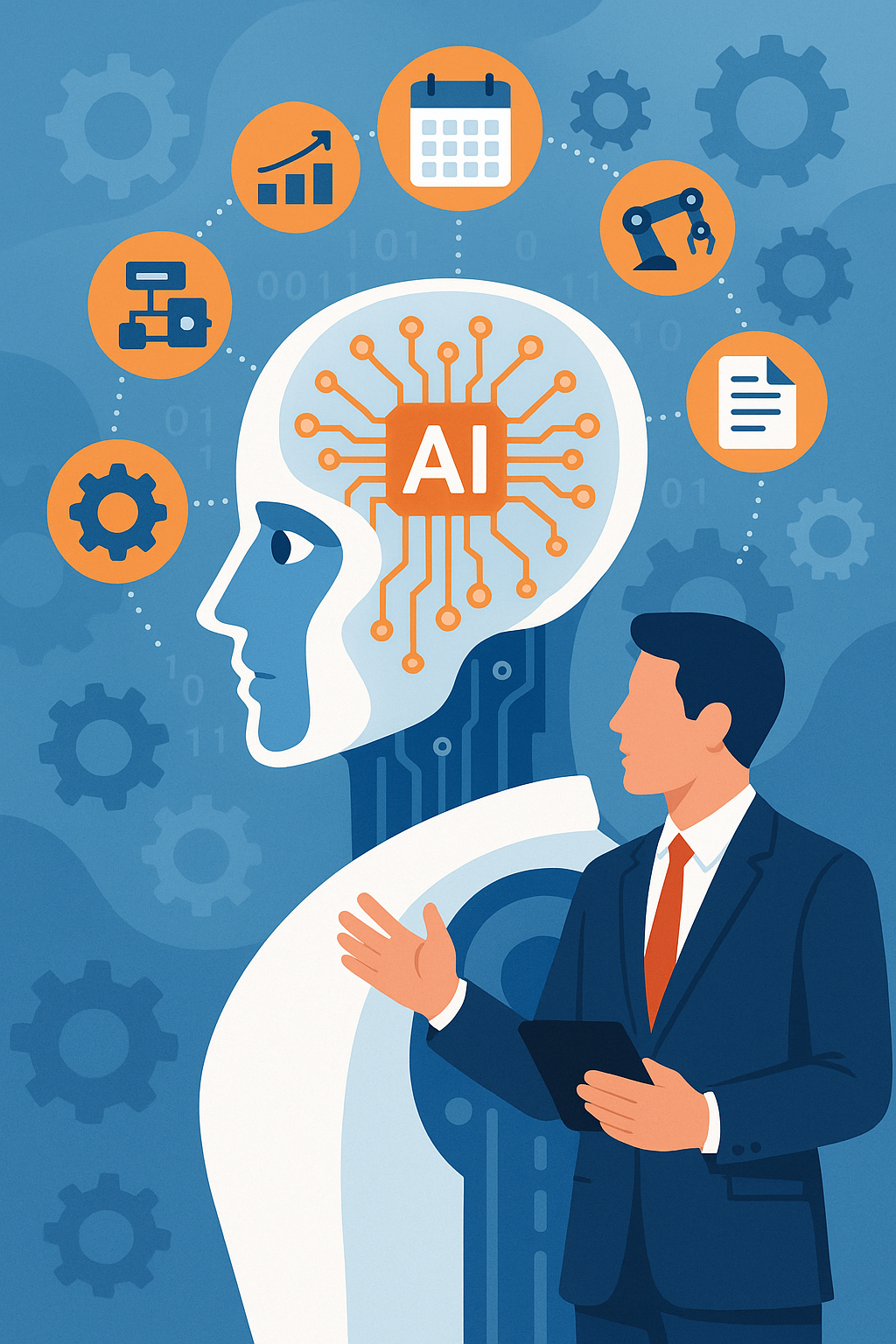
Get Ready for the AI Revolution: The Past Week’s Top 7 Stories in Business Automation
Welcome to the future! Or, at least, a recap of what’s been shaking up the AI industry over the past week. If you’re drowning in manual tasks or have nightmares about spreadsheets, fear not—AI is here to save the day, just like a digital superhero. So, grab a coffee and let’s dive into the top stories that might just transform your business.
1. OpenAI Launches GPT-5.2 for Long-Running “Agent” Work
OpenAI has announced GPT-5.2, their “most advanced model for professional work,” specially designed for autonomous, long-running AI agents. Imagine these agents as tireless interns, who not only bring you coffee but handle complex workflows for extended periods without a single coffee break! This new model aims to streamline multi-step business processes, making even the most complex orchestration tasks seem like child’s play.
2. Nvidia Expands Open-Source AI with New Models and an Acquisition
Nvidia is stepping up its game, unveiling new open AI models and completing an acquisition to bolster its open-source AI software stack. This move is like switching from a flip phone to the latest smartphone, offering enterprises more open and customizable tools with easier deployment, especially if your hardware happens to have a green eye-shaped logo.
3. Google DeepMind Pushes Gemini 3 for Multimodal Enterprise Use
Google’s DeepMind is actively pushing Gemini 3 and Gemini 3 Deep Think as the new standards for multimodal reasoning. If you ever wished your systems could handle both text and images simultaneously while performing complex reasoning tasks, Gemini 3 is here to make those dreams come true. Think of it as your Swiss Army knife for enterprise applications, supporting more than just simple calculations.
4. 2025 Enterprise AI Spend Triples, with Automation as a Core Driver
In a mind-boggling shift, enterprise spending on generative AI is set to hit $37 billion in 2025, up from $11.5 billion in 2024. This isn’t just buying new gadgets; it’s about adopting workflow and process automation to tackle real business problems. If you’re wondering how to make boring tasks obsolete, this trend suggests that automation, not procrastination, is key.
5. US Issues New National AI Policy Order to Unify State Rules
The White House recently acted on “Ensuring a National Policy Framework for Artificial Intelligence,” aiming to streamline regulations. It’s a move designed to make the landscape less like a law school exam and more predictable for businesses. AI deployment could soon be as straightforward as a state-level game of “Simon Says,” providing a clearer pathway to AI and automation integration.
6. December 2025 AI Business Tools Surge, Especially Agents and Copilots
Wave after wave of new AI productivity and tools have been noted, with AI agents moving from pilot to full production use. Companies are investing in employee training to foster collaboration with these digital tools. So, if your scheduling, customer service, or inventory tasks still make you groan, fear not–help is on the way, without the usual sighs.
7. Top Model Landscape for Business: Claude 4.5, GPT‑5.1, Gemini 3, Grok 4, Nano Banana Pro
Ah, the crème de la crème of current AI models—Claude Opus 4.5, GPT-5.1, Gemini 3 Pro, Grok 4, and the whimsically named Nano Banana Pro. Whether your business needs better coding tools, supports multimodal inputs, or requires real-time data, there’s an AI cake for every slice of business need.
Conclusion
From policy changes to groundbreaking AI models, the landscape of business automation is evolving rapidly. These stories aren’t merely about AI’s future capabilities—they’re a call to action for businesses to adopt, adapt, and automate. Dive in or be left behind!
Call to Action
Got a manual task you hate? Drop it in the comments; we’d love to hear about it! Or better yet, subscribe for more automation hacks, book a free 10-minute audit with AAAgency, or ping us to chat solutions. Remember, we’re all about turning chaos into 5x faster operational wins!
Here’s to a more automated future—where manual nightmares become a thing of the past and businesses can operate with less stress and more efficiency.